 Janice Mariana
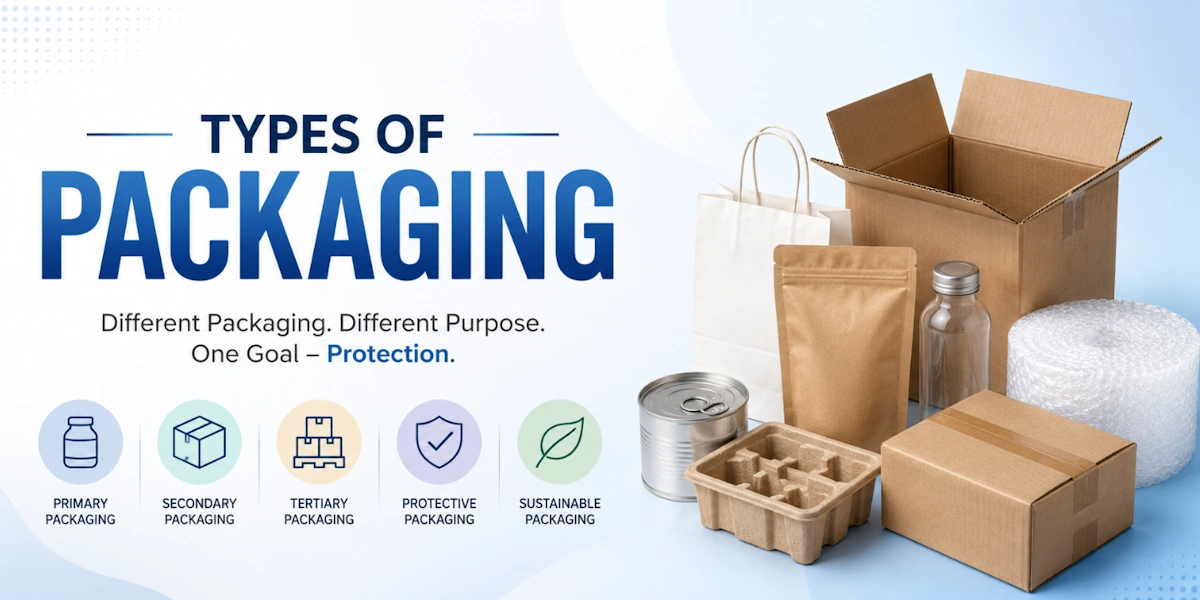
Packaging plays a key role in protecting, storing, and presenting products. It keeps items safe from damage, dust, and moisture while making them look more appealing to customers. It also helps in easy handling, transport, and display, making it an essential part of every product’s journey from the maker to the buyer.
Across industries, three types of packaging are used. Each packaging type plays a key role in keeping products safe throughout the supply chain.
3 Types of Packaging
Let’s explore three different types of packaging and their role across industries.
1. Primary Packaging
Primary packaging is the first layer that directly holds or contains the product. For example, a bottle for water or a wrapper for chocolate. It is designed to protect the product from contamination, damage, and spoilage while ensuring it stays safe for use or consumption.
It also carries important information such as ingredients, usage instructions, and expiry dates. Primary packaging also supports branding and marketing since it’s the first thing customers notice.
Common Examples
- Bottles (for beverages, medicines)
- Cans (for food or drinks)
- Wrappers (for candy or snacks)
- Blister packs (for pharmaceuticals)
- Tubes (for creams or toothpaste)
- Pouches and sachets (for coffee, snacks, sauces)
- Cartons (for milk, juices, or ice cream)
Industries Using Primary Packaging:
- Food and beverage
- Pharmaceuticals
- Cosmetics
- Retail and consumer goods
- Health and wellness
2. Secondary Packaging
Secondary packaging is the outer layer that holds one or more primary packages together. It provides an additional layer of protection. This helps group products for easier handling and transport. Secondary packaging also offers extra branding space and can be used for display purposes in retail. It keeps products safe during storage and shipment.
Examples of Secondary Packaging
- Cartons
- Cases
- Shrink-wrapped bundles
- Mailer boxes
Industries Using Secondary Packaging
- Food & beverage (grouping cans or bottles)
- Cosmetics and personal care (beauty kits, skincare sets, promotional packs)
- Retail & e-commerce (shelf-ready packs, multipacks)
- Consumer goods (bundles, gift sets)
- Electronics (boxed sets, kits)
- Pharmaceuticals (cartons of blister packs)
3. Tertiary Packaging
Tertiary packaging is the outermost layer used to move and store bulk products. It’s the strongest level of packaging. Such packaging is mainly used for shipping large quantities of goods. This layer protects secondary-packaged products during transit and storage. It helps with logistics, reduces handling time, and minimizes the risk of damage, loss, or theft.
Common Examples
- Pallets
- Stretch wraps
- Crates
- Containers
- Bundles
Industries Using Tertiary Packaging
- Manufacturing
- Logistics and distribution
- Wholesale and retail
- Automotive
- Electronics
Companies That Use Tertiary Packaging
- Amazon (E-commerce)
- PepsiCo (Food and Beverage)
- General Motors (Automotive)
- Apple (Electronics)
- Dow Chemical (Chemicals)
Why Understanding of Packaging Types Matters
Understanding the three levels of packaging helps businesses make smarter, cost-effective decisions. With this, businesses can make their supply chain more efficient. It also helps ensure that products stay safe from production to delivery.
Smart packaging choices can reduce costs, improve the customer experience, and support sustainability goals. They also help brands meet regulatory and environmental standards, making packaging not just functional, but also strategic.
Conclusion
Packaging is a key part of how goods are protected, stored, and presented. Each type of packaging, primary, secondary, and tertiary, plays an important role in keeping products safe, organized, and ready for sale or transport.
From protecting products to building brand appeal, packaging connects every step from the manufacturer to the customer. Choosing the right packaging type not only ensures safety and convenience but also helps build trust, reduce waste, and add value to your brand.