 Janice Mariana
Every product needs the right packaging to leave a lasting impression on customers. In the packaging world, two of the most common options are mailer boxes and shipping boxes. Choosing the right box may seem simple, but it can impact your costs, efficiency, and customer experience.
Both options are widely used in e-commerce and retail, but serve different purposes. Let's explore the differences between them to find the best option for your business. Understanding their differences helps you select packaging that fits your product and goals.
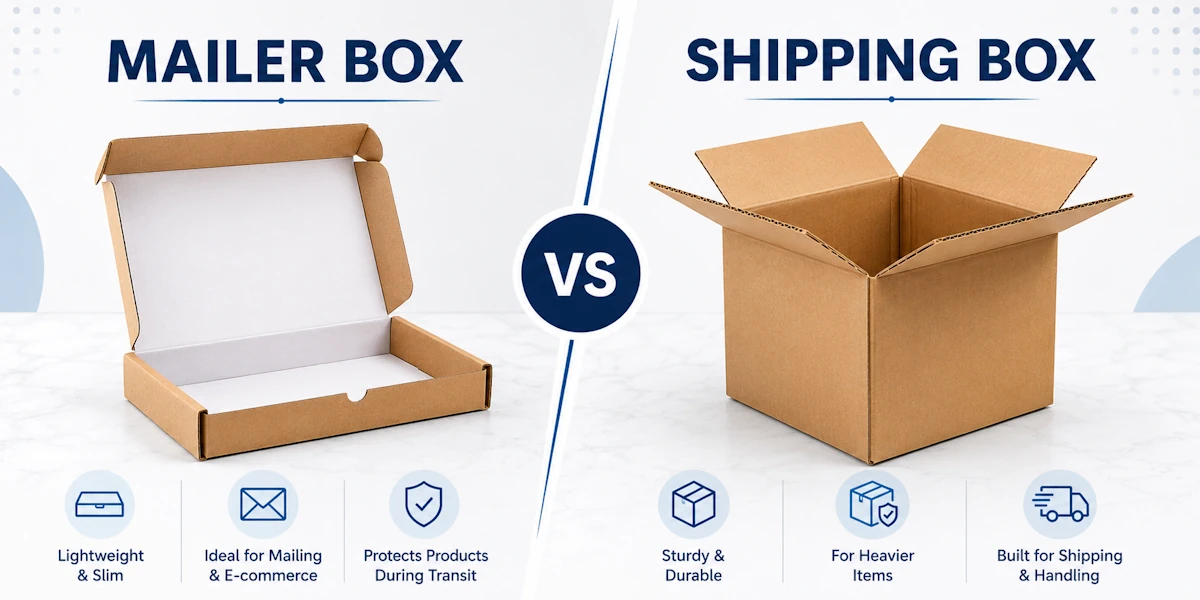
What is a Mailer Box?
A mailer box is a lightweight and compact packaging option. It’s made for small or non-fragile items. Mailer boxes are often made from corrugated cardboard material. Many are designed with a self-sealing feature. This helps save packing time.
Mailers are easy to assemble and don’t take up much space. These boxes are for brands that require affordable shipping with a professional look.
Common Uses
Mailers are commonly used for items like
- Apparel
- Books
- Documents
- Accessories
- Small electronics
Features of Mailer Boxes
- Lightweight and easy to handle
- Self-locking or self-sealing design
- Offers a clean look for branding
- Compact and saves space during transit
- Made from recyclable paperboard or kraft material
Popular Types of Mailer Boxes
- Standard Mailer Box (Tuck Top Mailer): A simple, lightweight box with top flaps that tuck inside for closure. These are commonly used for clothing, books, and other small products.
- Roll End Tuck Top Mailer (RETT): RETT boxes feature sturdy locking flaps that keep them secure without the need for tape or glue. It’s durable, easy to assemble, and ideal for fragile or heavier products.
- Roll End Front Tuck Mailer (REFT): These boxes feature a front flap that locks into the box’s front panel for a tight, secure closure. It provides excellent protection and is often used for high-end or premium e-commerce packaging.
What is a Shipping Box?
A shipping box is made of sturdy packaging. It’s made to hold heavy or fragile products safely. These boxes are made from corrugated cardboard or other tough materials. They protect items from impact and damage during shipping.
Common Uses
Shipping boxes are ideal for sending large or delicate items over long distances. These are commonly used in
- E-commerce
- Retail
- Manufacturing
Popular Types of Shipping Boxes
- Regular Slotted Cartons (RSC): The most common type of shipping boxes. Their flaps meet at the center when folded.
- Die-Cut Boxes: Custom shapes made to fit specific products.
- Double-Wall Boxes: Built with two layers for extra strength. Perfect for heavy or delicate goods.
- Flat Pack Boxes: Ideal for shipping bulk or flat items such as furniture parts or posters.
Features of Shipping Boxes
- High structural strength
- Double or triple-layer protection options
- Custom inserts for better cushioning
- Easy stacking for bulk shipments
- Suitable for both domestic and international transport
Difference Between Mailers and Shipping Boxes
Here’s a quick comparison between a mailer box and a shipping box to help you better understand the differences.
|
Factors |
Mailer Box |
Shipping Box |
|
Product size & weight |
For small, lightweight items |
For large, heavy, or bulky products |
|
Fragility |
Ideal for non-fragile goods |
Perfect for fragile/delicate items |
|
Shape of product |
Great for flat or flexible items |
Handles irregular or structured items better |
|
Shipping cost |
Lower cost |
Higher cost |
|
Packing time |
Quick & easy |
Require more time to assemble |
|
Branding options |
Limited |
Spacious |
|
Protection level |
Light protection |
High protection |
|
Presentation |
Simple, minimal |
Premium |
|
Product value |
Great for low-to-medium value products |
Best for high-value or fragile items |
Personalization Options For Mailer & Shipping Boxes
Both mailers and shipping boxes can be personalized to match your brand and product needs.
Mailer Boxes:
Mailer boxes are perfect for printing logos, colors, or taglines directly on the surface. Industries such as e-commerce and subscription services commonly use these boxes, where design is a key factor.
Shipping Boxes:
Shipping boxes feature a spacious area for printing and flexibility for customization, including inside printing, branded tape, or inserts for a premium experience.
Eco-Friendly Options
Sustainability is a growing priority for businesses across the US.
Mailers:
Mailers are available in kraft paper, compostable, or recycled versions. Their lightweight design also helps reduce shipping impact.
Shipping Boxes:
Shipping boxes can be made from recycled corrugated cardboard. These can be reused multiple times before recycling. Many brands now use water-based inks and biodegradable fillers for added eco-benefits.
Which Box is Right for Your Business?
The best packaging depends on:
- Product size & weight
- Transit distance
- Packaging display preferences
- Budget
Choose mailers if you send lightweight, non-fragile products and want quick, low-cost packing. Pick shipping boxes if your items are heavy, fragile, or high-value and need extra protection during transit.
Your choice of packaging tells a lot about your business to customers. It’s often the first physical impression customers have of your brand. Selecting the right one ensures safety, saves money, and delivers a better unboxing experience.
Conclusion
Choosing the right packaging, mailer box, or shipping box depends on your product, shipping needs, and budget. Mailers are ideal for lightweight, non-fragile items, while shipping boxes offer extra protection for heavier or delicate products. Picking the right box not only keeps items safe but also enhances the customer experience. It strengthens your brand image and ensures cost-effective, efficient shipping.